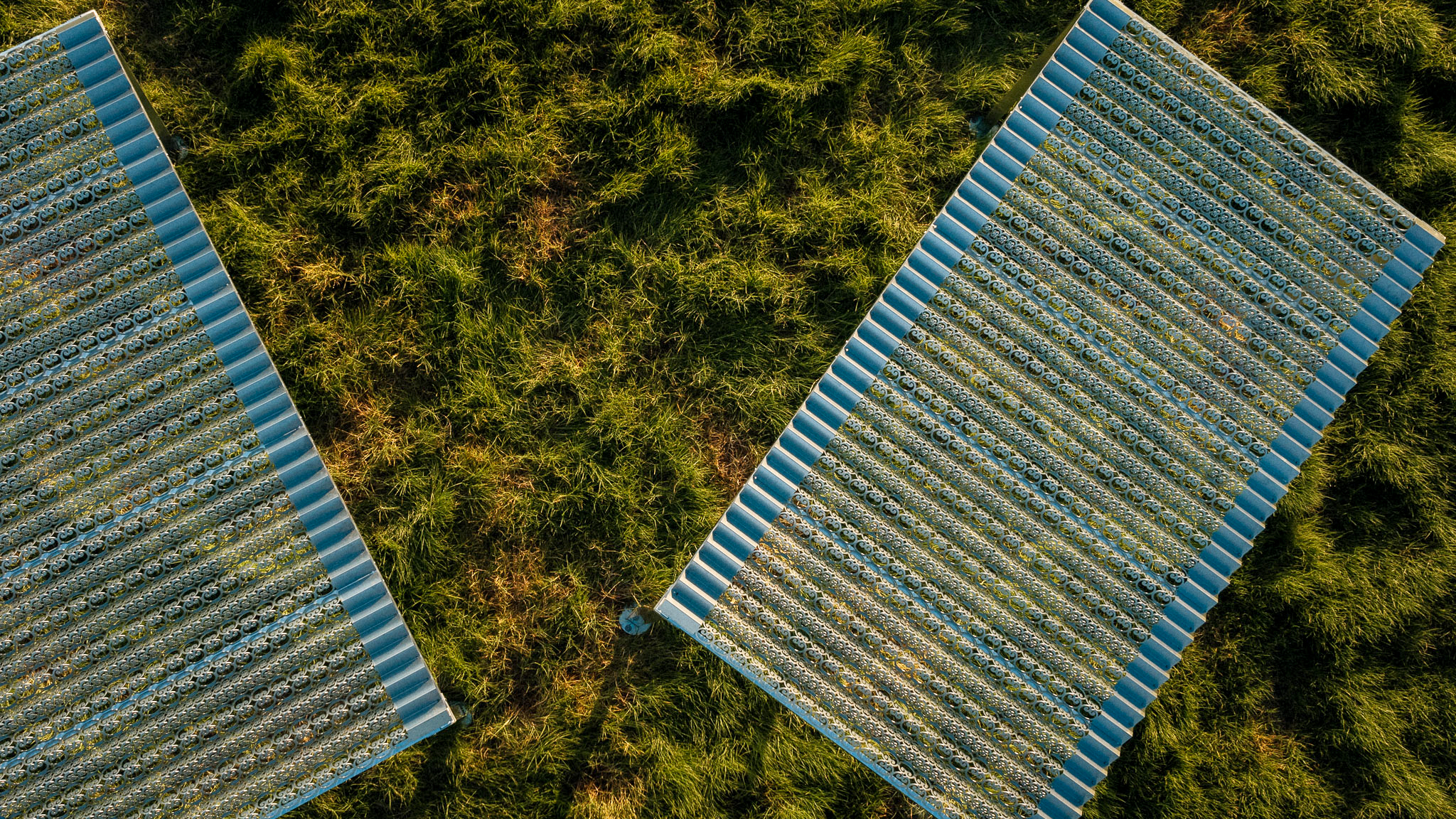
Lonnie Hutchinson, Moemoeā: A Model for Dreaming, 2024
Aluminium. Courtesy Milford Galleries, Dunedin and Queenstown. Thanks to INEX Metals Ltd, Precision Laser Cutting & Welding, and Total Fabrication & Welding.
Lonnie Hutchinson became known for cutting kowhaiwhai patterns into concertinaed black builder’s paper. Sometimes these paper cuts are presented as works; sometimes used as guides to laser-cut sheet metal. Moemoeā: A Model for Dreaming is a metal canopy, under which we can lie and daydream. Raised on poles, it provides shelter to visitors, a moment of pause. We can look up at the kowhaiwhai pattern and consider the ancestral stories it holds or down on the moving shadows it casts on the ground. Hutchinson’s canopy recalls the corrugated-iron roofs used in settler-style homes around Aotearoa/New Zealand, while its pattern offers a counter rhythm.
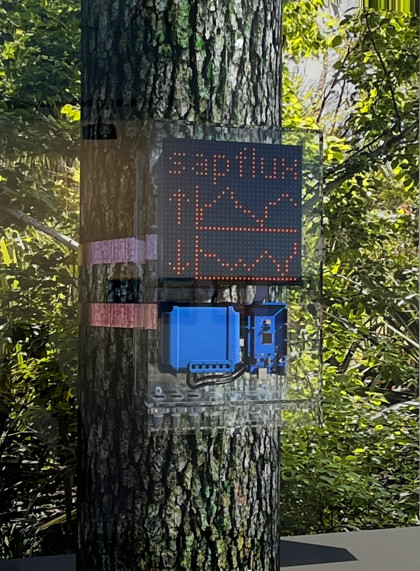
Terrestrial Assemblages (Simon Ingram with Kamahi Electronics, Verdi NZ, and Acryform), Sapflux Monitor, 2024
Kawa poplar, sap sensor, cabling, solar panel and assembly, charge controller, battery, microcontrollers, code, RGB LED matrix panel, and plexiglass. Courtesy Gow Langsford Gallery, Tāmaki Makaurau/Auckland. With support from Chris and Charlotte Swasbrook, and Kamahi Electronics.
Simon Ingram draws on approaches from artificial life, brain science, robotics, radio astronomy, and earth-system science. For many years, he has been making paintings by systemic, mechanical, and electronic means. The gridded compositions of his early Automata Paintings were arrived at using simple algorithms. Later, he developed painting machines that generated novel compositions in response to low-frequency atmospheric waves and high-frequency cosmic waves. Ingram has become increasingly involved in environmental concerns. In 2019, he formed Terrestrial Assemblages, a contemporary-art-based ecological working group, to create awareness of natural systems. Terrestrial Assemblages’ Sapflux Monitor visualises sap flow in a kawa tree, and the humidity and air temperature around it, using an assembly of sensors, microcontrollers, and code. It demonstrates dynamic processes within the tree, as it responds and deals with climatic conditions, in situ and in real time.
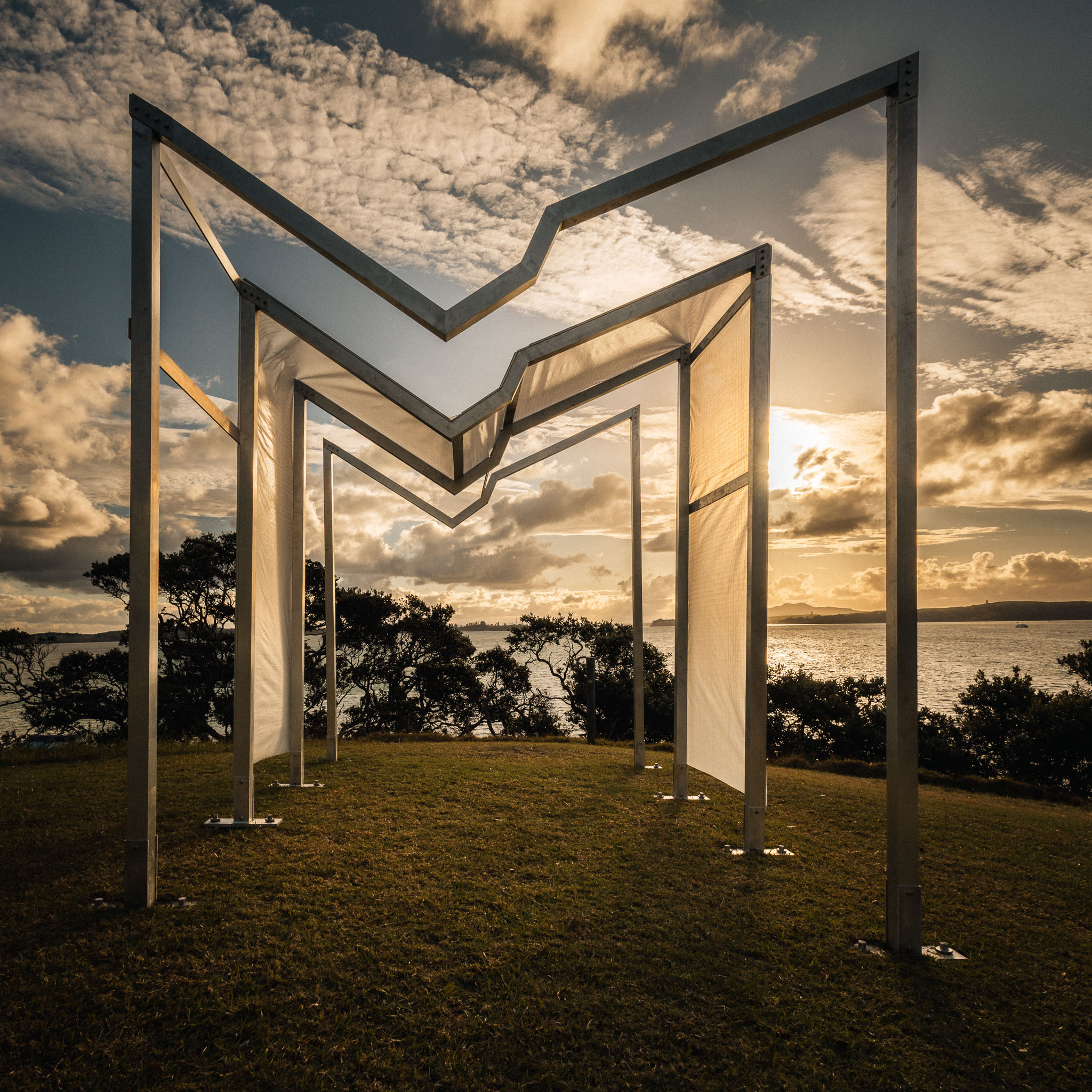
Ana Iti, Whakaruruhau, 2024
Aluminium and shade cloth. Thanks to INEX Metals Ltd and Total Fabrication & Welding.
The kahukura, an endemic butterfly, lays its eggs in the leaves of the ongaonga, a native stinging nettle. Small spikes cover the ongaonga’s stem and a line forms on the midrib of its leaves. As a fortress against predatory mammals and birds, it offers a sanctuary for kahukura and their larvae. Ana Iti’s Whakaruruhau recalls both the plant’s leaves and the butterfly’s wings. Made of gardeners’ shade cloth tensioned across metal frames, it creates a small space of shelter, like the ongaonga. It emphasises the symbiotic relationship that has evolved between creature and plant over centuries. Presented in the landscape, it situates this relationship within a larger, interconnected ecosystem, made up of many such exchanges.
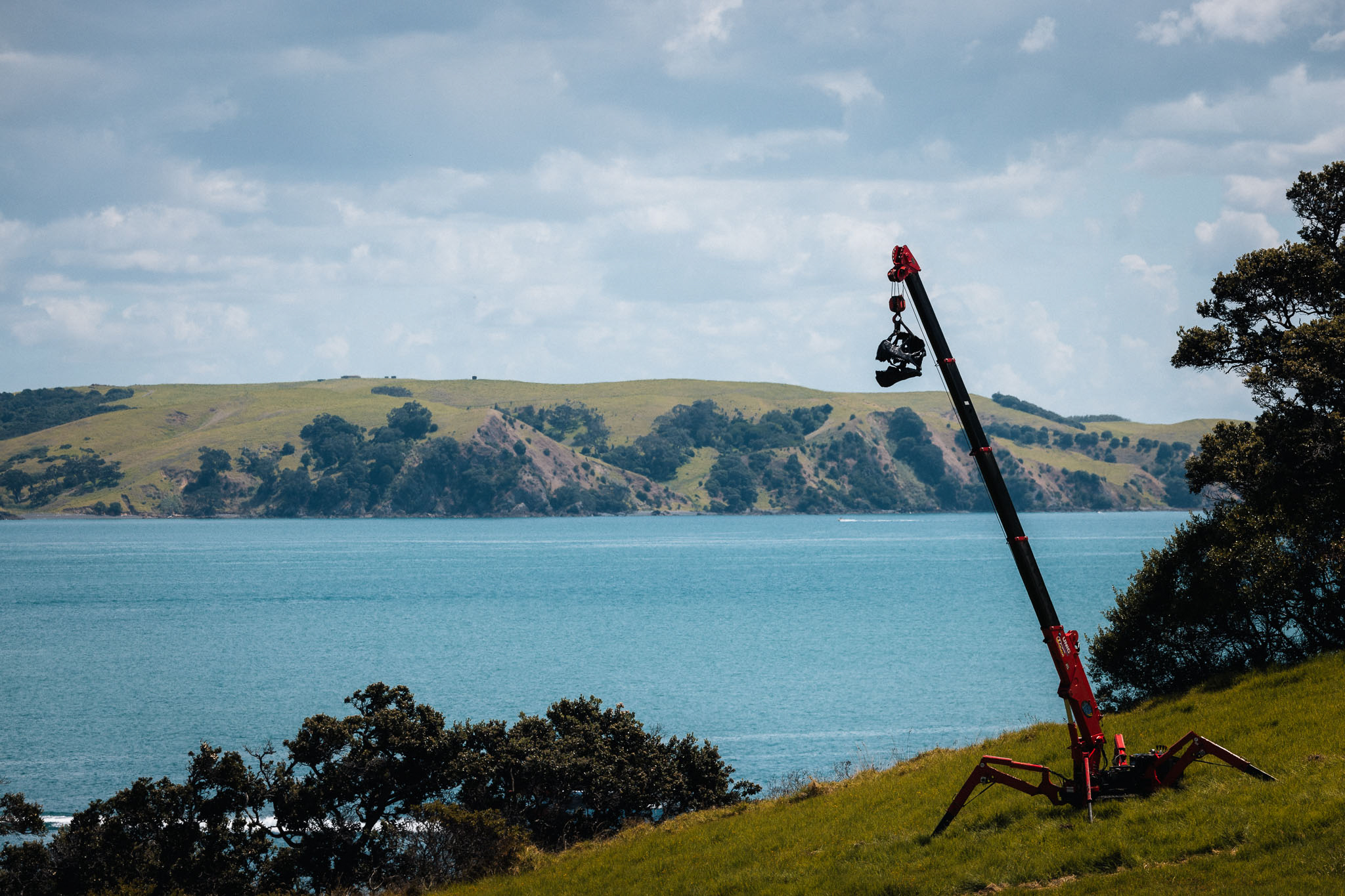
Zac Langdon-Pole, Chimera, 2024
Bronze Camarasaurus skull, spider crane. Courtesy Michael Lett, Auckland. With support from Richard Douglas and Kriselle Baker.
During the late-nineteenth century, in a period known as the ‘Bone Wars’, US palaeontologists rushed to discover new dinosaur species. In 1877, Othniel Charles Marsh discovered a massive, almost complete skeleton of a species he went on to name the Brontosaurus, meaning ‘noble thunder lizard’. It was assembled at the American Museum of Natural History, becoming famous as the first full dinosaur skeleton to be placed on public display. But it wasn’t a full specimen, but a hybrid of two long-necked dinosaurs: its body was from an Apatosaurus, its head from a Camarasaurus. Nevertheless, today, ‘the Brontosaurus’ remains a fixture in the popular imagination. Intrigued by this story of miscategorisation and the disordering of scientific knowledge, Zac Langdon-Pole mounts a bronze-cast Camarasaurus skull on a spider crane to create a new hybrid monument. His title comes from Greek mythology, where Chimera was an imaginary monster composed of incongruous animal parts. He says: ‘The Brontosaurus was one of the first avatars of the modern age. Like ourselves, it has one foot in fact and one in fiction. Chimera is an ode to two related yet divergent stories: the deep time of the Earth and the “progress” of human civilisation, where cranes fuelled by fossils dominate our skylines, building upwards.’
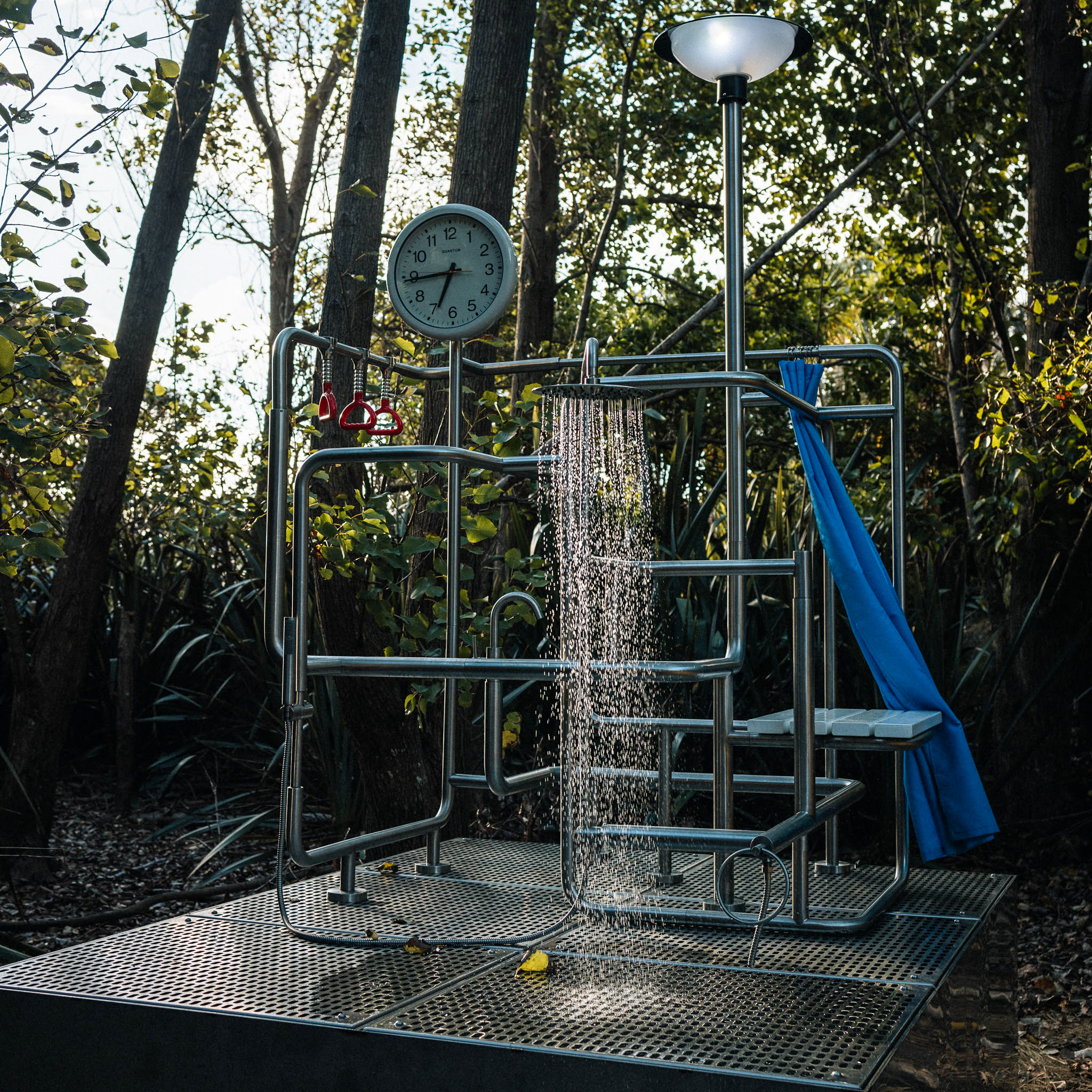
Yona Lee, Fountain in Transit, 2023
Stainless steel and fixtures and fittings. Courtesy Fine Arts, Sydney.
All over the world, wherever we go, generic stainless-steel handrails and barriers are there to aid us, impede us, and control us. They’re so ubiquitous, they’re invisible. We don’t give them a second thought. But Yona Lee insistently draws our attention to them. Her installations and sculptures combine mazes of stainless-steel tubing with random flurries of everyday fixtures and fittings—mop heads and mailboxes, bus seats and beds, phone chargers and umbrellas—as if mocking their utility. Fountain in Transit combines bathroom fixtures—including a shower head, shower curtain, and drain—with a street lamp, a bench, bus handles, and a clock, prompting us to imagine a scenario in which these might come together.
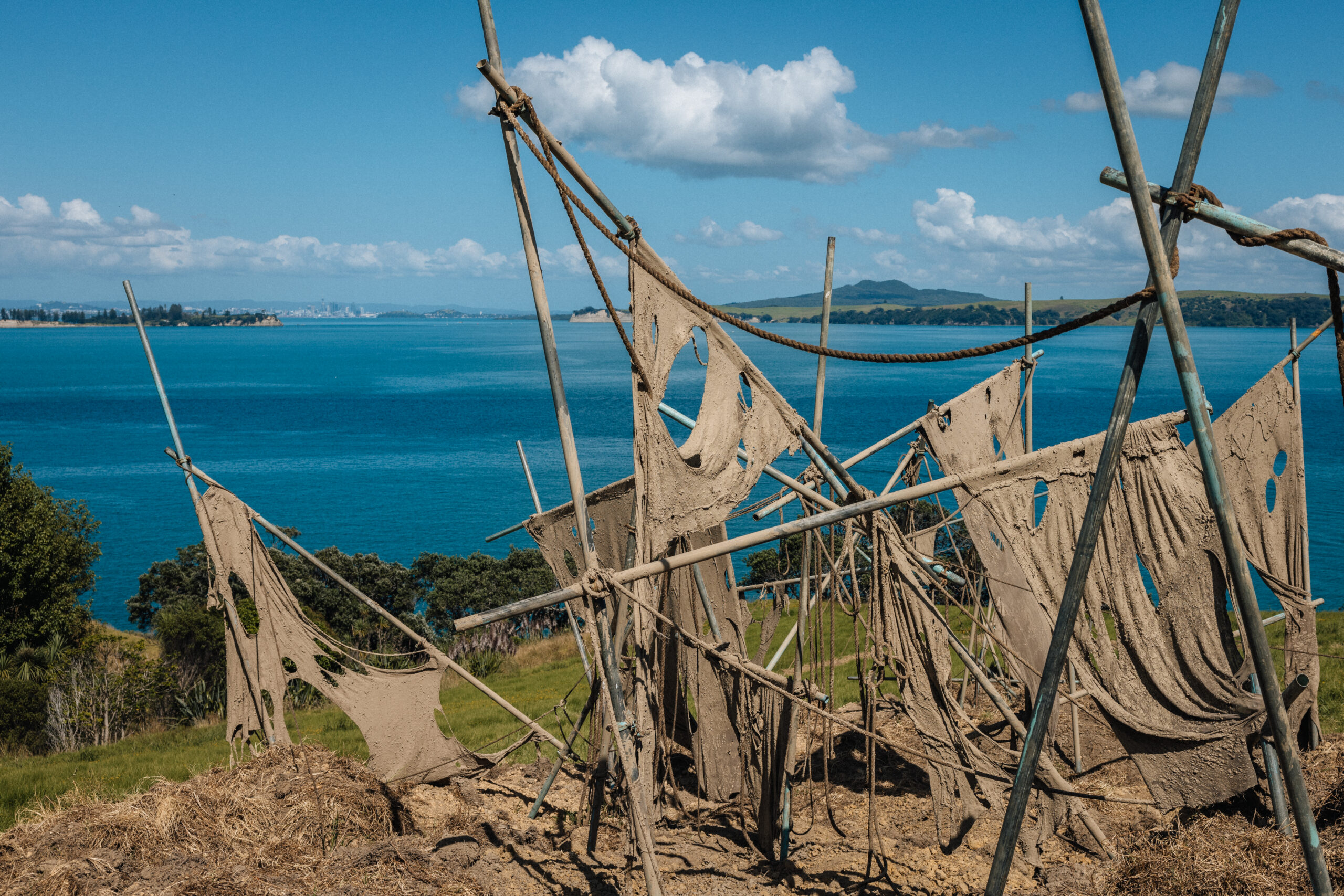
Isabella Loudon, No Tomorrow, 2024
Scaffolding, steel, mud, cheesecloth, and rope.
Going for a walk on Auckland’s West Coast in the wake of last year’s floods was to encounter a landscape calm and familiar, yet with periodic reminders of recent disaster. A river may have returned to its usual flow and path, but debris hanging from bowed fence posts recalled how high it had risen and how violently it had raged. Isabella Loudon’s sculpture No Tomorrow—made of derelict scaffolding draped in mud-caked cloth, stiffened into shape—is a meditation on the inevitability of such change and our vulnerability to forces beyond our control. In its slumped and sunken forms, she hopes we see the fatigue and grief we experience when confronted with disaster.
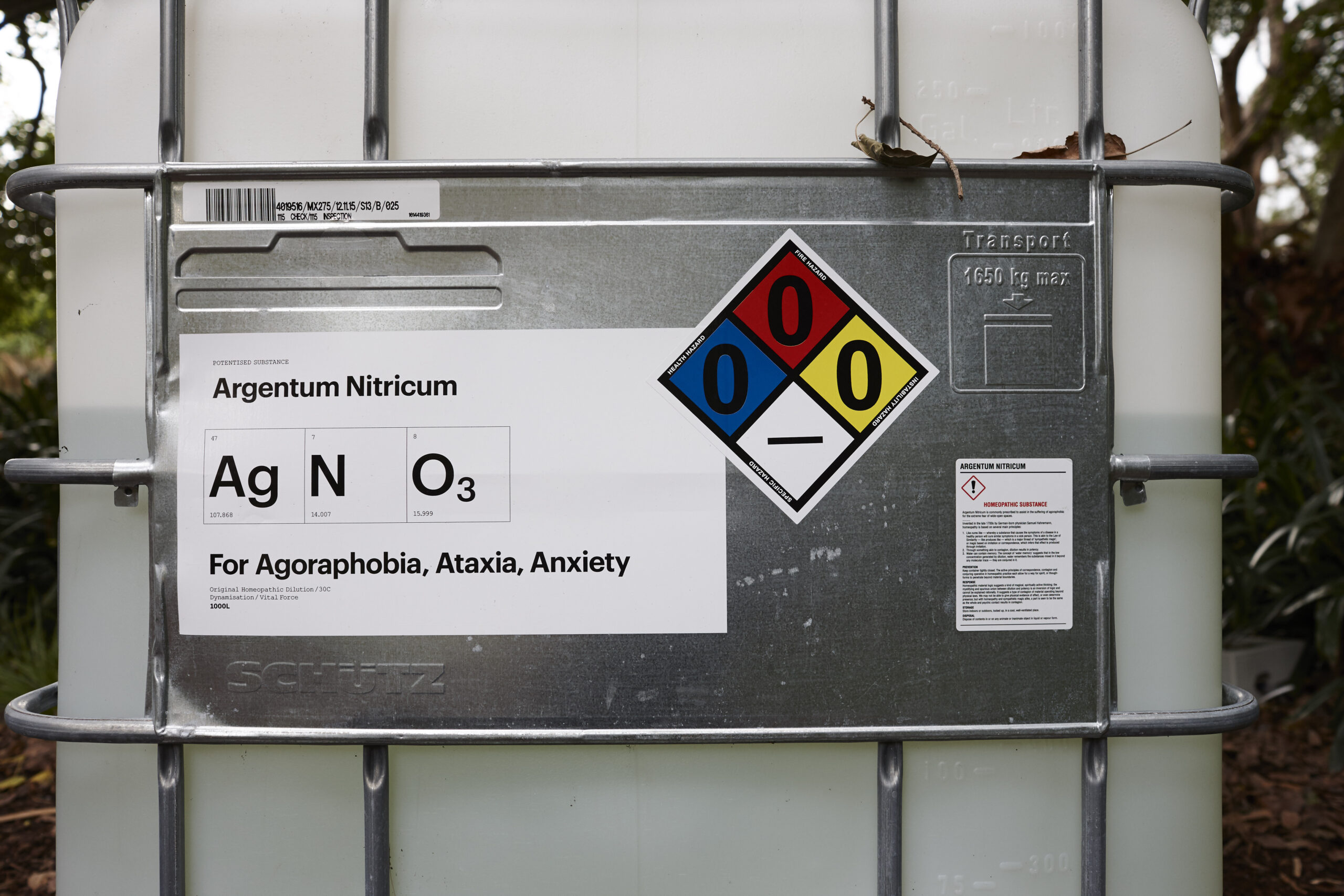
Dane Mitchell, Remedy for Agoraphobia, Ataxia, Anxiety (AgNO3), 2016
Homeopathic remedy and intermediate bulk containers. Courtesy The Renshaws, Brisbane.
Remedy for Agoraphobia, Ataxia, Anxiety (AgNO3) is a stack of intermediary bulk containers (IBCs) containing a homeopathic remedy for agoraphobia (fear of open spaces), ataxia (impaired balance or coordination), and anxiety—all pathologies one might experience while walking the sculpture trail. Homeopathic medicine emerged in Germany in the late eighteenth century. It was underpinned by some fantastic ideas—that dilution results in potency and that water has a memory. Homeopathic practices remain popular, but have been absorbed into the natural and holistic health industry, losing some of their mystical character. While key homeopathic principles have little currency in modern medicine, they remain rich in artistic possibility. Mitchell invites us to approach a threshold of perceptibility.

Denis O’Connor, Lucken’s Wing, 2024
Hardwood Meranti plytech, metal, paint, and slate.
A meticulously restored, custom-painted Harley Pocket-Rocket bicycle rests on a launch pad—a four-metre-long carpenter’s slate pencil—whose tip points up, out, and across the gulf, towards Hauturu/Little Barrier Island, like a stunt ramp or rocket launcher. Lucken’s Wing is Denis O’Connor’s tribute to backyard tinkerers and jacks-of-all-trades, and recalls a vibrant culture of amateur motoring on Waiheke. In the 1930s and 1940s, the island was host to the Waiheke TT Races, where motorbikes would race around Onetangi Loop Road (then paved only with shingle). Until the 1990s, one would often see jerry-built handcarts and tandem or trailer contraptions making their way around the Island. O’Connor commemorates those anonymous dreamers without degrees or industrial resources who designed their dream vehicles on the back of envelopes and realised them using hand tools and scavenged materials, operating on nothing but a ‘wing and a prayer’, as the text on one side of his pencil-ramp reads.
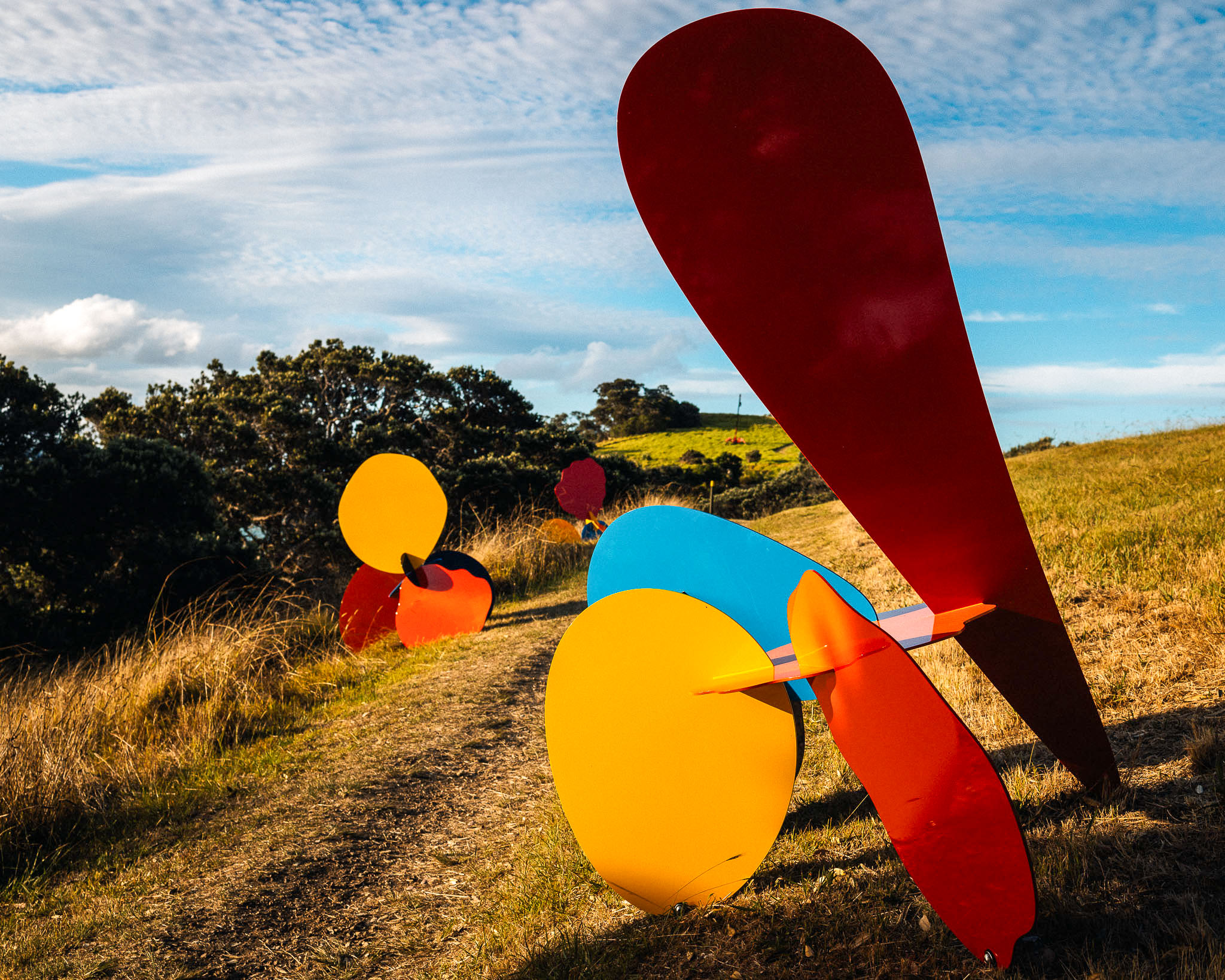
Seung Yul Oh, Cycloid I, II, III, IV, V, and VI, 2024
Aluminium, epoxy paint. Courtesy Starkwhite, Tāmaki Makaurau/Auckland. Thanks to INEX Metals Ltd and Precision Laser Cutting & Welding.
Seung Yul Oh developed his Cycloid sculptures to play off the natural landscape that surrounds them, the expansive skies that flood the land and sea with sunlight by day, and the moon and stars by night. The six works are made of circular metal disks, airbrushed in brightly coloured car paints and wedged together. As we move past them, the whole procession starts to hum with motion, reflecting light, transforming, hanging on the verge of disappearance.
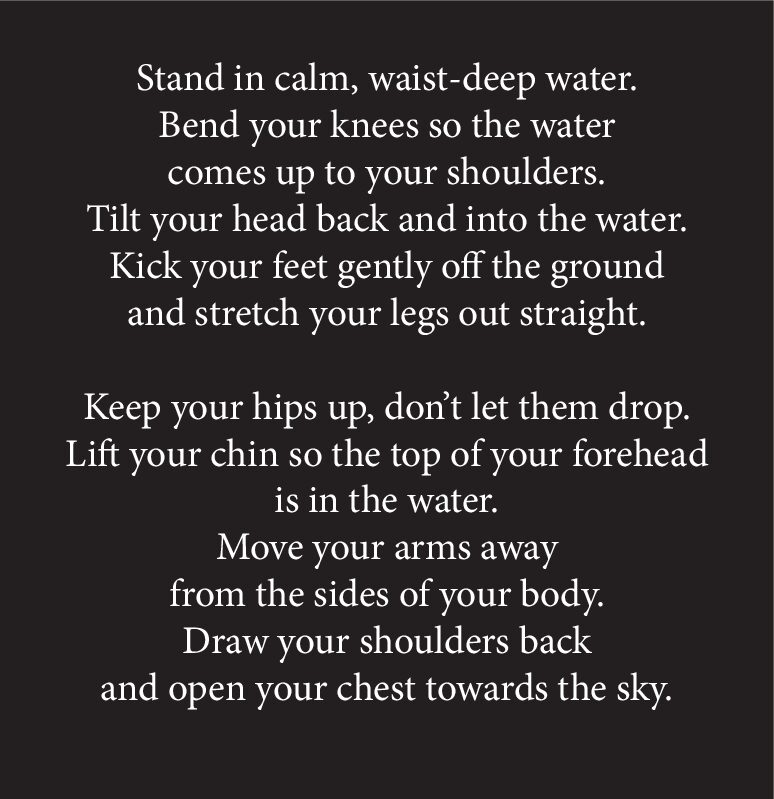
Marie Shannon Learning to Float, 2024
Video, Courtesy Trish Clark Gallery, Tāmaki Makaurau/Auckland. Thanks to Fullers 360.
The first step in learning to swim is learning to float, learning to trust the water to hold up your body. What seems so simple can be daunting. Playing on the video screens of the Waiheke ferry, Marie Shannon’s video demystifies this encounter. Its text suggestively instructs us in the process of learning to float. Presented on the Waiheke ferry, where the rhythm of the water can be felt through the body, it invites passengers to imagine themselves in the Gulf, allowing themselves to be gently rocked, taking their first tentative strokes.
