TEST
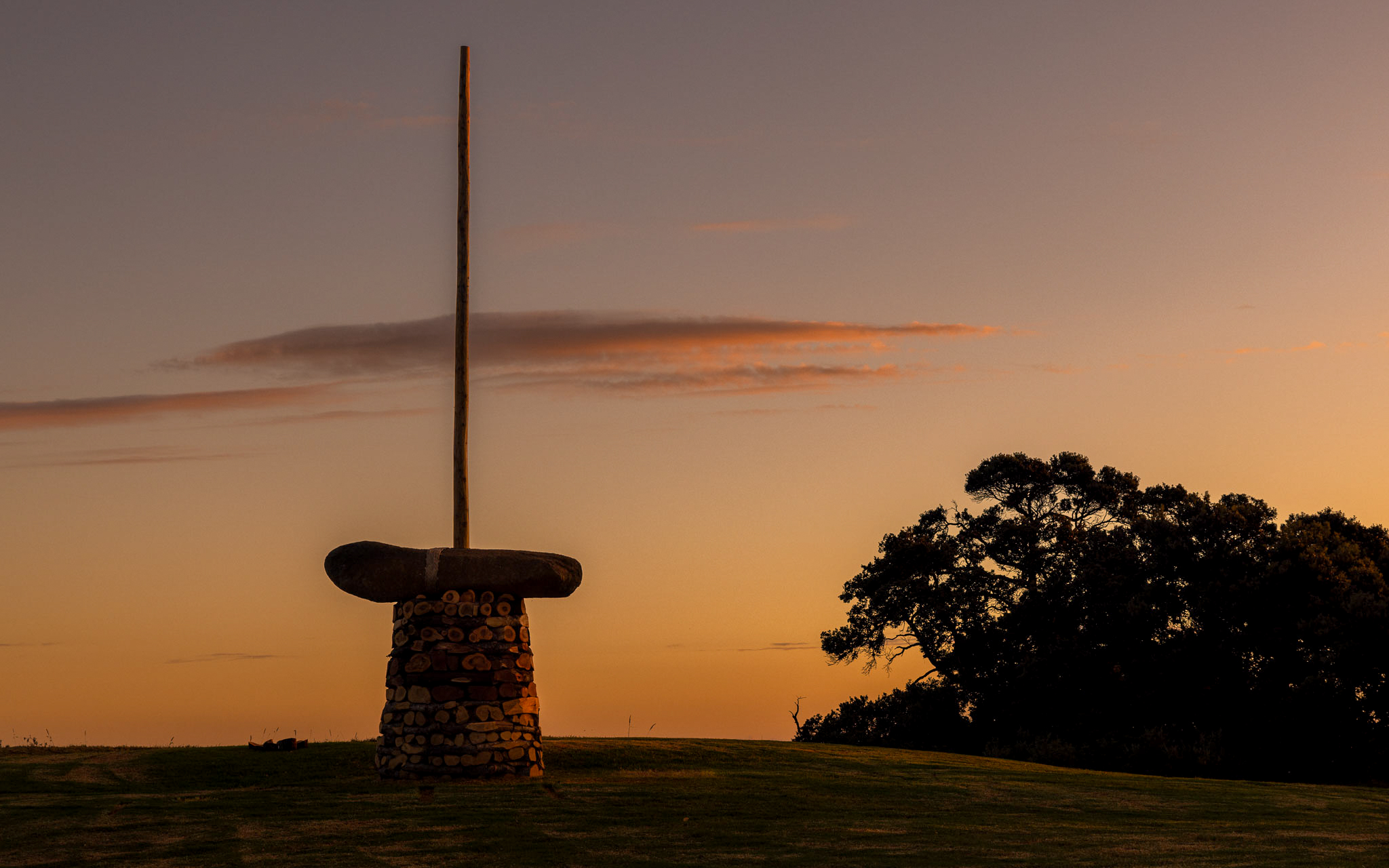
Stone, wood, stainless-steel cable, and fungi. Thanks to Allpress Olive Groves.
Chris Booth discovered the stone that features in his work in Tākou, Northland. Over centuries, it had been shaped by acid wash from the rotting foliage of prehistoric forests. Struck by its unique shape and proportions, which reminded him of a shrouded human body, Booth arranged with the kaitiaki to remove it. But, when it was dumped in his yard along with tonnes of heavy boulders, it broke in two. Years later, Booth and fellow Northland sculptor Tom Hei Hei tended to it like a damaged limb, using steel pins and bandages to make it whole again. Booth placed it atop a pyre structure made of Waiheke olive wood. A pyre would usually go up in flames, but here it is passed on to the world’s tiniest organisms. Slowly, billions of microscopic mycorrhizal fungi will consume the olive wood supporting the stone, lowering it back to earth. Booth contrasts this constant activity with the eternity represented by the rock, in a tribute to cycles of life and death in which everything has its place.